When it feels as though your skin has a mind of its own
You cleanse carefully, try another serum and promise yourself that you will leave that spot alone. Then another breakout appears, your skin becomes shiny by lunchtime or the pores around your nose and chin look congested again.
Living with acne and oily skin can be frustrating, especially when the advice you receive is contradictory. One product leaves your skin tight and uncomfortable. Another seems to make the congestion worse. Perhaps your skin was clear for years and adult breakouts have appeared without an obvious reason.
You are not failing at skincare. Acne, excess oil and blocked pores can develop for several reasons, and harshly stripping the skin rarely solves the underlying problem.
At Skin Perfection London, we start by examining what is actually happening within your skin. We then create a personalised plan that may combine professional treatments, Dermalux LED phototherapy and carefully selected home care.
The aim is not to promise permanently perfect skin. It is to help you understand your triggers, reduce suitable concerns and feel more in control of your complexion.
Book a Consultation Not ready to book? Enquire nowAcne, oily skin and blocked pores are connected, but they are not identical
It is easy to describe every bump or visible pore as acne. In reality, your skin may be dealing with several overlapping concerns.
Excess oil can contribute to congestion, but oily skin can also become dehydrated or irritated. Blocked pores do not always become inflamed spots. Meanwhile, some red bumps that look like acne may be associated with another condition entirely.
Understanding the difference matters because the wrong approach can make the skin more sensitive without addressing the concern.
What is acne?
Acne develops when hair follicles become blocked by sebum and dead skin cells. Changes within the blocked follicle can then contribute to inflammation and the development of spots.
Acne may appear on the:
- Face
- Jawline
- Neck
- Chest
- Shoulders
- Upper arms
- Back
It can range from mild blackheads and whiteheads to inflamed spots, painful nodules and cysts.
What causes oily skin?
Sebum is the natural oil that helps protect your skin and prevent excessive water loss. Oily skin develops when the sebaceous glands produce more sebum than the skin requires.
Oil production may be influenced by:
- Genetics
- Hormonal changes
- Age
- Stress
- Climate and humidity
- Certain medications
- Inappropriate or overly harsh skincare
- Changes associated with the menstrual cycle, pregnancy or menopause
Having oily skin does not mean that your skin is dirty. Washing aggressively or using drying products can sometimes leave the skin irritated and uncomfortable without resolving oil production.
What are blocked pores?
Pores may become congested when sebum, dead skin cells and other debris accumulate within the follicle.
An open blockage can appear as a blackhead. The dark colour is not trapped dirt. It develops when the contents of the pore are exposed to air.
A closed blockage may appear as a whitehead or a small skin-coloured bump beneath the surface.
Pores cannot physically open and close like doors. However, reducing congestion and supporting smoother texture may make them appear less noticeable.
What different types of acne can look like
Blackheads and whiteheads
Blackheads and whiteheads are forms of comedonal acne caused by blocked follicles.
They commonly appear around the nose, chin and forehead, although they can affect other areas of the face and body.
Papules and pustules
Papules are small, inflamed bumps without a visible head. Pustules contain fluid or pus and are often what patients think of as a typical spot.
Picking or squeezing them may increase inflammation, prolong healing and contribute to marks or scarring.
Nodules and cysts
Nodules and cysts develop deeper within the skin and may feel painful or tender. They carry a greater risk of permanent scarring.
Moderate or severe acne, including nodules and cysts, should be assessed by a GP or dermatologist. Professional cosmetic treatments should support appropriate medical care rather than delay it.
Adult and hormonal acne
Adult acne may continue from adolescence or begin later in life. In women, breakouts often appear around the chin, jawline and lower face, although patterns vary.
Hormonal fluctuations may contribute, but acne cannot be diagnosed as hormonal from its location alone. Persistent acne accompanied by irregular periods, excess facial hair or other hormonal symptoms should be discussed with a GP.
Body acne
Acne can also develop across the chest, back, shoulders and upper arms. Sweat, friction, tight clothing and certain hair or body products may aggravate breakouts in these areas.
Some body rashes and inflamed follicles can resemble acne but have a different cause. An accurate medical diagnosis may be needed when the condition is widespread, painful or persistent.
Why has my skin suddenly started breaking out?
A sudden change does not always have one obvious explanation. Your skin may respond to several factors at the same time.
What can trigger or worsen breakouts?
- Puberty and hormonal fluctuations
- The menstrual cycle, pregnancy or menopause
- Polycystic ovary syndrome
- Stress and disrupted sleep
- Starting or stopping certain medication
- Occlusive makeup, haircare or skincare products
- Over-exfoliating or combining too many active ingredients
- Friction from helmets, masks or tight clothing
- Frequently touching or picking the skin
- A change in climate or environment
- An unsuitable skincare routine
- Family history and genetic tendency
Food may influence acne for some people, but restrictive diets should not be started based on social-media advice. Speak to an appropriate healthcare or nutrition professional if you suspect a dietary factor.
Why picking, stripping and constantly changing products can make things harder
When a breakout appears, it is tempting to attack it. Strong acids, drying cleansers and frequent scrubs can make the skin feel temporarily cleaner, but irritation may leave it more sensitive and harder to manage.
Picking and squeezing can push inflammation deeper into the skin, prolong visible redness and increase the likelihood of post-inflammatory marks or scarring.
Changing several products at once creates another problem. If your skin improves or becomes irritated, you will not know which product caused the change.
A more effective approach is usually calmer:
- Use a suitable cleanser without repeatedly stripping the skin
- Introduce active ingredients gradually
- Avoid using several strong exfoliants together
- Choose non-comedogenic moisturiser and sun protection
- Keep makeup brushes and items touching the face clean
- Allow enough time to assess whether a routine is helping
- Seek medical advice for persistent or severe acne
Healthy acne-prone skin still needs hydration and barrier support. Oily does not automatically mean well hydrated.
Your skin assessment at Skin Perfection London
Before recommending treatment, we take time to understand what your skin has been doing and what you have already tried.
Your consultation may include Skin Observ imaging at no additional cost. This helps us examine visible and underlying features such as oil distribution, congestion, dehydration and areas requiring closer attention.
Skin Observ supports our cosmetic assessment, but it does not diagnose acne, hormonal disorders or medical skin conditions.
We will discuss:
- The type and location of your breakouts
- Whether congestion or inflammation is the main concern
- Oil production, sensitivity and dehydration
- Your current skincare and makeup
- Prescription or over-the-counter acne treatment
- Previous professional procedures
- Medication, allergies and medical history
- Lifestyle factors that may affect your skin
- The level of downtime you can accommodate
- Whether medical advice should come first
Your consultation costs £25, which you can redeem against treatment. There is no obligation to proceed.
Book a Consultation Not ready to book? Enquire nowWhich treatments can help acne, oily skin and blocked pores?
Your treatment plan will depend on whether the priority is active breakouts, inflammation, congestion, excess oil, sensitivity or the marks left behind.
Click here to see suitable acne treatment options
Personalised acne treatments
Our acne programmes combine suitable procedures and home care according to your skin’s current condition.
The plan may change as your skin changes. A treatment that helps during a congested phase may not be appropriate when the skin is inflamed, sensitised or using prescription medication.
Professional skin peels and resurfacers
A professionally selected peel may help reduce congestion, refine uneven texture and support a clearer-looking complexion.
The formulation and strength must suit your skin tone, sensitivity, current products and type of acne. Stronger does not automatically mean better.
Some peels require preparation, a patch test and a period of visible flaking or downtime.
BioRePeel
BioRePeel is a professional peel that may suit selected patients concerned about congestion, uneven texture, dullness and post-breakout marks.
It is not automatically appropriate for every active breakout or sensitive skin condition. Suitability will be confirmed during consultation.
Dermalux LED phototherapy
Dermalux LED phototherapy uses selected wavelengths of light as part of a non-invasive skin treatment.
Blue light may be selected to support acne-prone skin, while red and near-infrared wavelengths may be incorporated to support the skin and reduce the appearance of inflammation.
LED does not replace prescription treatment for moderate or severe acne, but it may form part of a wider professional plan.
Medical microdermabrasion
Medical microdermabrasion exfoliates the surface of the skin and may suit selected patients with non-inflamed congestion, roughness and blocked pores.
It is not appropriate over painful, inflamed or cystic acne. Treatment intensity must also be adapted to skin sensitivity and any active ingredients being used.
3D HydrO2 Facial
A personalised 3D HydrO2 Facial may help cleanse, exfoliate and hydrate suitable oily or congested skin.
The treatment stages and products can be adjusted according to your skin. Patients with active, inflamed or medically treated acne may need a different approach.
Professional home care
The products you use between appointments can have as much influence as the treatment itself.
We may recommend a simple routine using professionally selected products from ranges such as DermaQuest, Epionce or other brands stocked by the clinic.
The aim is not to sell you the longest possible routine. It is to choose products that support your skin without unnecessarily duplicating active ingredients or overwhelming the barrier.
What about microneedling for acne?
Microneedling is generally used for the marks and textural scars left after acne rather than across actively inflamed, infected or cystic breakouts.
Performing microneedling at the wrong stage may irritate the skin and is unlikely to address the cause of active acne.
Once breakouts are sufficiently controlled, Dermapen 4 may be considered for selected concerns such as:
- Atrophic acne scars
- Uneven texture
- Enlarged-looking pores
- Certain post-acne marks
- Reduced skin smoothness
Different acne scars require different approaches. Ice-pick, boxcar and rolling scars do not necessarily respond in the same way.
What improvements can you realistically expect?
Depending on your skin, treatment plan and consistency, professional support may help your complexion appear:
- Calmer and less inflamed
- Less congested
- More balanced in oil production
- Smoother and more refined
- Clearer across areas prone to blocked pores
- More even after previous breakouts
- Easier to manage with an appropriate home routine
Acne is not always something that disappears permanently after one treatment course. Hormonal fluctuations, stress, medication and other factors may cause future breakouts.
Our goal is to help reduce the severity and frequency of suitable concerns while giving you a clearer understanding of how to manage your skin.
No responsible clinic can promise that you will never experience another spot.
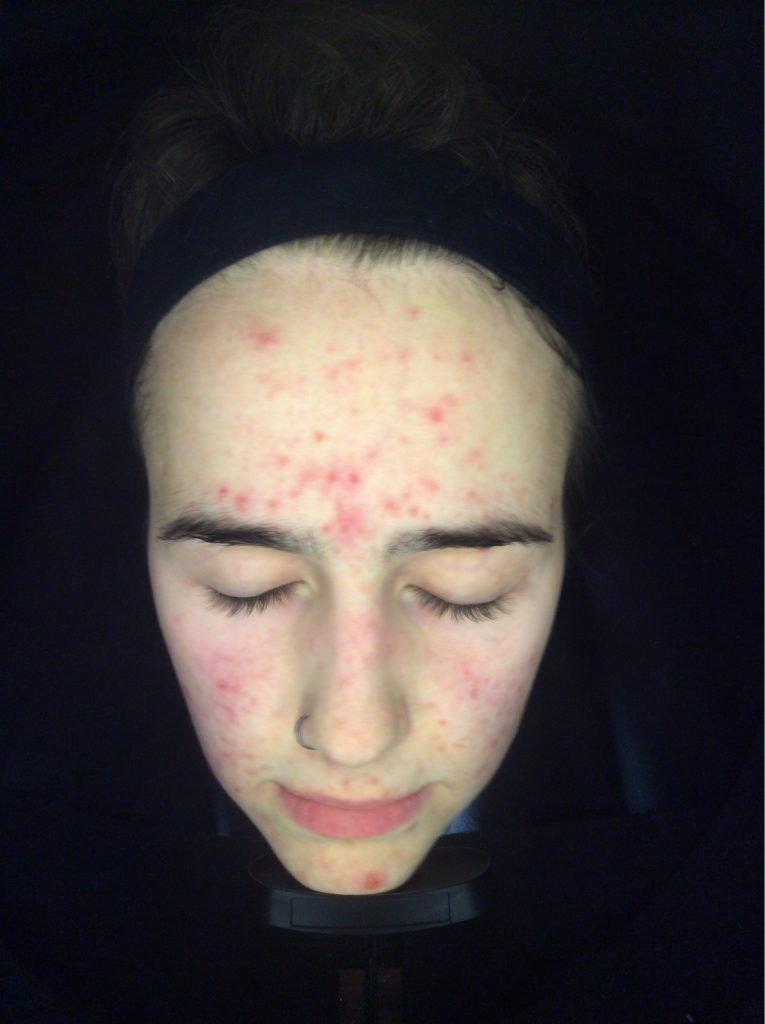
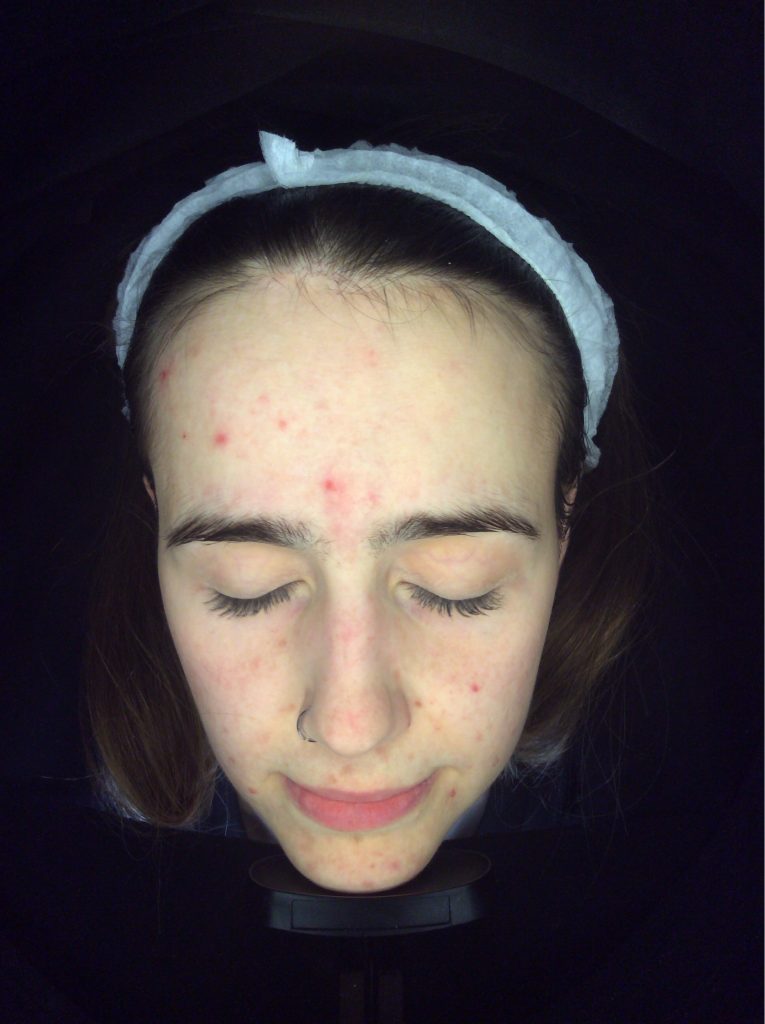
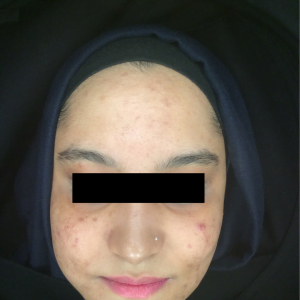
Acne before and after results
Individual results vary. The response depends on factors including the type and severity of acne, treatment selected, home care, medication, hormones, lifestyle and consistency.

Why choose Skin Perfection London?
Acne-prone skin does not need judgement, aggressive treatment or another promise that one product will solve everything.
At Skin Perfection London, you will receive:
- A detailed consultation and visual skin assessment
- Skin Observ imaging included within your consultation
- A plan based on your current skin rather than a generic package
- Access to several treatment options rather than one fixed procedure
- Professional skincare selected for your needs
- Honest guidance about when medical care should come first
- Progress monitoring throughout your treatment programme
- Clear preparation and aftercare advice
- Realistic expectations without promises of permanent clearance
- Care from an experienced, award-winning skin team
- Treatment in a Central London clinic licensed by Westminster City Council
Clearer skin begins with understanding it
When you have tried product after product, it is easy to feel as though your skin is the problem. It is not.
Your skin is responding to something. Our role is to help you understand what may be influencing it, calm the urge to try everything at once and create a plan that feels manageable.
Book a no-obligation consultation at Skin Perfection London and take the first step towards skin that feels clearer, calmer and easier to live with.