Table of Contents
- What Are the Negatives of Laser Hair Removal?
- Laser Hair Removal Side Effects You Should Know
- Pigmentation Risks and How Skin Tone Affects Safety
- How Many Sessions for Laser Hair Removal and What Happens If You Stop
- Laser Hair Removal Aftercare: What to Avoid Before and After
- The Psychological Impact of Adverse Effects
- Managing Expectations: What Laser Hair Removal Can and Cannot Do
- Frequently Asked Questions
Last Updated: September 11, 2026
What Are the Negatives of Laser Hair Removal?
Laser hair removal is a cosmetic procedure that uses concentrated light to damage hair follicles and reduce hair growth. At Skin Perfection London, we believe patients deserve a full picture before booking. The most common downsides are temporary skin irritation, redness and swelling, with rarer risks including blistering, pigmentation changes and paradoxical hypertrichosis. Understanding these risks, and how a qualified practitioner manages them, is the difference between a smooth experience and a long recovery.
Below, we break down the side effects, who faces higher risk, how many sessions are typically needed, and what aftercare actually involves, so you can weigh the negatives against the results.
Laser Hair Removal Side Effects You Should Know
Laser hair removal side effects range from mild, short-lived reactions to rare complications that require medical attention. The likelihood of each depends on your skin phototype, the device used, the fluence and pulse duration selected, the adequacy of cooling, and the skill of your practitioner.
Common Reactions: Erythema, Edema and Folliculitis
Erythema is redness of the skin, and it is the most predictable reaction after a session. It typically fades within hours to a couple of days. Edema, or swelling around the treated follicles, is also common and usually settles quickly.
Folliculitis, a temporary inflammation of the hair follicles that can look like small red bumps, is another frequent complaint. These reactions are transient and generally manageable with cooling and gentle skincare.
The discomfort itself is often described as a brief snapping sensation, similar to a rubber band flicking the skin. As one Skin Perfection London patient, Sophie Latham, put it: “I have noticed significant improvement in the targeted areas. The discomfort is absolutely minimal and fades in a few seconds.”
Rare but Serious Complications: Blistering, Scarring and Paradoxical Hypertrichosis
Blistering and scarring are uncommon but possible, particularly when the wrong wavelength or fluence is used for a given skin phototype. Thermal injury to the epidermis can occur if cooling is inadequate or the practitioner misjudges settings.
How the injury happens. The laser’s chromophore is melanin. When the epidermis contains more melanin than the intended target, that surface pigment absorbs energy before it reaches the follicle. Without sufficient contact or cryogen cooling, the heat builds in the skin rather than the follicle, producing a superficial burn. This is why a patch test on a small area, reviewed 48 to 72 hours later, is standard good practice rather than an optional extra (the American Academy of Dermatology).
Device and wavelength matter. Alexandrite lasers (around 755 nm) are fast and effective on lighter phototypes but carry a higher epidermal burn risk on darker skin. Diode lasers (around 800-810 nm) offer a middle ground with built-in contact cooling. Nd:YAG lasers (1064 nm) bypass epidermal melanin most effectively and are generally the safer choice for deeper phototypes, though they require higher fluences and may need more sessions.
Paradoxical hypertrichosis is a counterintuitive reaction where laser treatment stimulates additional hair growth in the treated area, most often on the face and neck. It is more frequently reported in patients with darker skin tones or a hormonal underlying cause, and it can appear as fine, dense hair that was not there before treatment (PubMed). It is often under-reported because patients assume the regrowth means the treatment simply failed.
When to Seek Medical Help After Treatment
Most reactions settle on their own. Contact your clinic or seek medical advice if you experience any of the following:
- Blistering, weeping or open skin in the treated area
- Increasing pain, heat, redness or swelling after the first 48 hours, which may indicate infection
- Fever or feeling generally unwell
- Pigment change that is spreading or not fading after several weeks
- Any sign of an allergic reaction, such as widespread hives or difficulty breathing
The Psychological Toll of a Bad Reaction
The emotional impact of an adverse effect is rarely discussed, yet it can outweigh the physical symptoms. Visible redness, crusting or pigmentation changes on the face or arms can affect confidence, work and social life, particularly when the reaction was unexpected.
Patients who were promised “painless, permanent” results and then experienced blistering or darkening often feel betrayed, which erodes trust in the clinic and in aesthetic treatments generally. Managing expectations upfront is not just good practice; it is a form of harm reduction. If you are already anxious about your appearance, a realistic conversation about risks before treatment is essential. Ask what happens if a reaction occurs, and who will manage it.
Pigmentation Risks and How Skin Tone Affects Safety
Pigmentation changes are among the most discussed negatives of laser hair removal, and skin tone is the single biggest factor. The Fitzpatrick scale classifies skin from Type I (very fair) to Type VI (deeply pigmented), and it guides which wavelength and settings a practitioner should use.
Why Melanin Creates the Risk
The core problem is melanin. Laser energy targets melanin in the hair follicle, but melanin also sits in the surrounding epidermis. In darker skin, that competing melanin absorbs more energy, raising the risk of hyperpigmentation (darkening) or hypopigmentation (lightening) if the device is not matched correctly.
Hyperpigmentation typically presents as darkened patches that follow the treated area. It is usually transient and fades over weeks to months as the skin renews, but it can persist, particularly if the skin is exposed to sun during healing or if the reaction was severe.
Hypopigmentation is less common but more stubborn. It appears as lighter patches where melanocytes have been damaged, and it can take many months to resolve, occasionally longer. This is the outcome patients tend to find most distressing, because it is harder to conceal and slower to fade.
Matching Device to Phototype
This is why patch tests and skin phototype assessment matter. A clinic using appropriate technology and experienced practitioners can treat darker skin tones safely, but the margin for error is narrower.
- Type I-IIII: Alexandrite or diode platforms are typically well tolerated, with low pigment risk.
- Type IV-VI: Nd:YAG is generally preferred because its longer wavelength bypasses epidermal melanin more effectively. Higher fluences and more sessions are often needed to compensate for the lower melanin absorption in the follicle.
Ask which platform will be used on your skin, and why.
Reducing Your Risk
- Insist on a patch test at least 48 hours before a full session
- Avoid sun exposure and self-tan for four-six weeks before and after treatment
- Use broad-spectrum SPF 30+ daily on treated areas
- Be honest about any recent sun exposure, tanning or photosensitising medication
- Avoid treating tanned skin, which behaves like a darker phototype and raises burn risk
Clara Armando, a Skin Perfection London patient, noted: “I have definitely seen a great improvement from my laser hair removal treatment and I would definitely recommend the clinic for dark skin person.”
How Many Sessions for Laser Hair Removal and What Happens If You Stop
Most people need a course of sessions rather than a single appointment, because hair grows in cycles and laser only affects follicles in the active growth phase. A typical plan involves multiple sessions spaced several weeks apart, with the exact number depending on the treatment area, hair colour and thickness, and hormonal factors.
Stopping partway through is one of the underrated negatives. You will not lose the progress already made, but you may see partial regrowth in areas that were not yet fully treated. Results are best maintained with occasional top-up sessions.
If you have a hormonal condition such as polycystic ovary syndrome, regrowth can be more stubborn regardless of how many sessions you complete. This is a conversation worth having at consultation, not after you have paid for a package.
Laser Hair Removal Aftercare: What to Avoid Before and After
Laser hair removal aftercare determines how quickly your skin recovers and how well results hold. Before treatment, avoid waxing, plucking and epilating for several weeks, since the laser needs an intact hair root to work. Shaving is fine. Avoid sun exposure and self-tan in the weeks (4-6 weeks) beforehand.
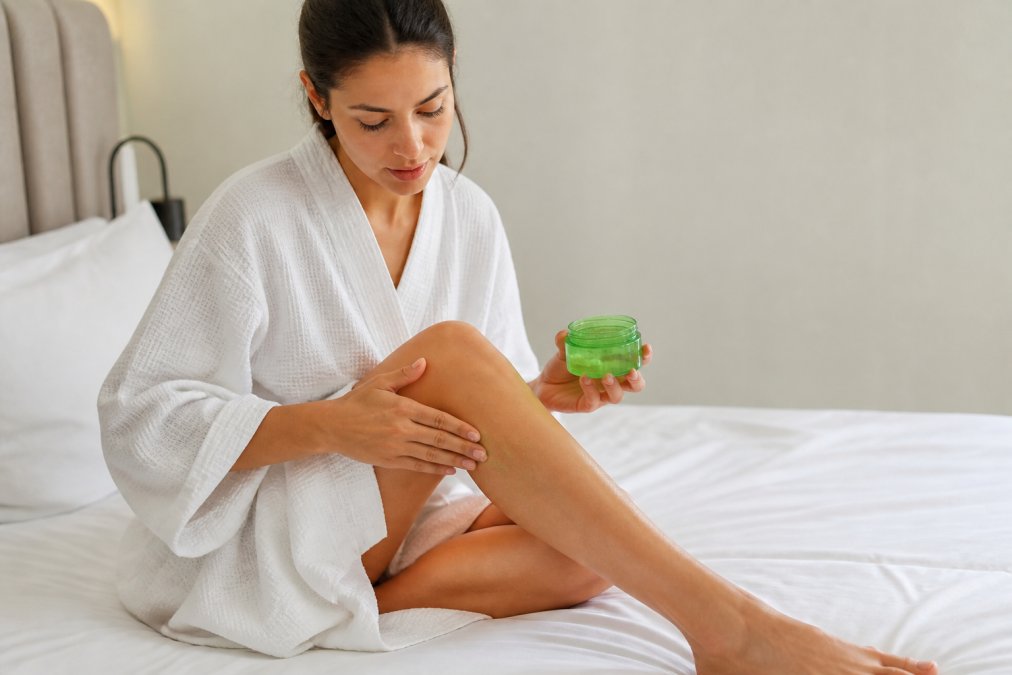
A woman applying soothing aloe vera gel to her leg after a laser hair removal session
After treatment:
- Skip hot baths, saunas and strenuous exercise for 48 hours
- Avoid direct sun and use SPF 30+ on treated areas
- Do not scrub, exfoliate or use retinoids for several days
- Apply a gentle, fragrance-free moisturiser or cooling gel
- Avoid picking at any crusting, which can lead to scarring
The Psychological Impact of Adverse Effects
The emotional toll of a bad reaction is rarely discussed, yet it can outweigh the physical symptoms. Visible redness, crusting or pigmentation changes on the face or arms can affect confidence, work and social life, particularly when the reaction was unexpected.
Patients who were promised “painless, permanent” results and then experienced blistering or darkening often feel betrayed, which erodes trust in the clinic and in aesthetic treatments generally. Managing expectations upfront is not just good practice; it is a form of harm reduction.
If you are already anxious about your appearance, a realistic conversation about risks before treatment is essential. Ask what happens if a reaction occurs, and who will manage it.
Managing Expectations: What Laser Hair Removal Can and Cannot Do
Laser hair removal reduces hair growth; it does not always eliminate it permanently. Most patients see significant reduction after a full course, but some fine or light-coloured hair responds poorly, and hormonal regrowth is possible.
What laser cannot do: guarantee zero regrowth, treat white or very fine blond hair effectively, or replace medical treatment for an underlying hormonal condition. What it can do, with the right device and practitioner, is deliver a substantial, long-lasting reduction with minimal discomfort.
At Skin Perfection London, established in 2012, we use clinically proven technology and tailor each plan to the individual, including patients with darker skin tones or sensitive skin. If you are weighing up the negatives against the results, a consultation is the honest place to start.
Frequently Asked Questions
Is laser hair removal 100% safe?
No treatment is completely risk-free. Laser hair removal is generally safe when performed by trained practitioners using appropriate settings for your skin type. Common side effects include transient redness, swelling and discomfort. Rare complications include blistering, scarring and pigmentation changes. A patch test and consultation help identify risks for your skin tone before treatment.
Can laser hair removal cause skin discolouration?
Yes, laser hair removal can cause hyperpigmentation (darkening) or hypopigmentation (lightening) of the treated skin. These changes are more common in people with darker skin tones or those who expose treated areas to the sun. Using the correct wavelength and cooling device reduces risk. Most discolouration is transient, but some cases can persist and require dermatologist assessment.
What should I avoid doing before and after a laser session?
Before treatment, avoid waxing, plucking or sun exposure for at least two weeks. Shaving is fine. After treatment, avoid hot baths, saunas, intense exercise and sun exposure for 24 to 48 hours. Do not pick at any crusting. Apply a gentle moisturiser and use SPF 30 or higher on treated areas. Follow your practitioner’s specific aftercare instructions.
Are there specific skin types that should avoid laser hair removal?
People with active skin infections, open wounds, or certain medications that cause photosensitivity should avoid laser hair removal. Those with a history of keloid scarring or very dark skin phototypes (Fitzpatrick V-VI) need careful assessment. A qualified practitioner can determine if treatment is suitable and which device settings are safest for your skin.