Table of Contents
- How Medical-Grade Laser Hair Removal Works
- Which Laser Technology Suits Your Skin and Hair
- Preparing for Laser Hair Removal: Shaving, Patch Tests and What to Avoid
- During Your Session: Sensation, Cooling Technology and Timing
- How Many Sessions for Laser Hair Removal on Face and Body
- Laser Hair Removal Aftercare Tips for Smooth, Calm Skin
- Is Laser Hair Removal Permanent? Results and Maintenance Costs
- Choosing a Clinic: Consultation, Qualifications and Clinical Safety
- Frequently Asked Questions
Last Updated: September 14, 2026
How Medical-Grade Laser Hair Removal Works
Medical-grade laser hair removal is a clinical procedure that targets the pigment in hair follicles with concentrated light energy, damaging them enough to slow or stop future growth. At Skin Perfection London, we use clinically-proven technology to treat unwanted hair with minimal discomfort.
The laser’s light is absorbed by melanin, the pigment that gives hair and skin their colour. That energy converts to heat, which affects the follicle’s ability to produce new hair. Because the laser responds to pigment, it works best on hair that contrasts with the surrounding skin, though modern devices and cooling systems have widened the range of skin tones that can be treated safely.
The Growth Cycle and Why Timing Matters
Hair grows in phases, and only hair in the active anagen phase responds well to laser treatment. At any given time, a proportion of your hair is resting or shedding, which is why one session never clears an area completely.
This is the single biggest reason people think laser “didn’t work” after one appointment. It did. It just couldn’t reach the hair that wasn’t actively growing yet. Spacing sessions to catch each wave of follicles in the right phase is what produces a treatment plan that actually delivers.
Which Laser Technology Suits Your Skin and Hair
The right laser for you depends on your Fitzpatrick skin type, your natural hair colour, and the area being treated. There is no single best device for everyone, and any clinic claiming otherwise is oversimplifying.
Knowing which laser technology is used lets you ask sharper questions at your consultation.
Laser type | Typical wavelength | Best suited to | Trade-offs |
|---|---|---|---|
Alexandrite | Around 755 nm | Fair to olive skin (Fitzpatrick I-III), fine to medium hair | Fast and effective on lighter skin, but higher risk of pigment change on deeper tones |
Diode | Around 800-810 nm | A broad middle range (Fitzpatrick I-IV), including many medium tones | Good balance of speed and comfort; results vary with the specific device and cooling |
Nd:YAG | Around 1064 nm | Deeper skin tones (Fitzpatrick IV-VI) and coarser hair | Safer for melanin-rich skin because it bypasses surface pigment, but often needs more sessions |
Different wavelengths penetrate to different depths and target pigment with varying selectivity. A practitioner matches the wavelength and settings to your skin so the energy reaches the hair follicle without over-treating the surrounding skin.
Skin Tone, Hair Colour and Fitzpatrick Skin Type
The Fitzpatrick skin type scale runs from very fair skin that burns easily to deeply pigmented skin. Darker skin contains more melanin in the surrounding skin as well as the hair, so the practitioner has to work more carefully to protect the skin while still reaching the follicle. Adjusting laser settings to accommodate these variations in melanin ensures safety, much like how maintaining a consistent post-shave care routine preserves the integrity of the skin between sessions.
This is where technology choice and practitioner skill matter most. If you have darker skin, ask specifically how the clinic protects against burns and pigment changes, and whether they adjust settings for your skin type rather than using one default.
Hair Colour and Why Grey or White Hair Is Different
Laser energy is absorbed by melanin, so hair that has lost its pigment, grey, white, or very light blonde, gives the laser almost nothing to target. Most practitioners will tell you honestly that these hairs respond poorly or not at all, and some clinics will decline the treatment rather than take your money for a course that cannot work.
If your concern is a mix of pigmented and non-pigmented hair, ask what proportion of your hair is likely to respond and whether a top-up plan makes sense. This is a more useful question than “how many sessions will I need?” because the answer depends on how much of your hair the laser can actually see.
Cooling Technology and Why It Matters for Comfort
Modern devices use cooling technology built into the handpiece, chilled tips, cryogen sprays, or forced cold air, which chills the skin as the laser fires. That cooling is what makes the aesthetic practitioner able to work comfortably across larger body areas without the treatment becoming unbearable, and it also reduces the surface heat that contributes to pigment changes on deeper skin tones.
When you compare clinics, ask what cooling system their device uses and whether it is integrated into the handpiece or applied separately. A clinic that can explain this in plain terms is usually one that understands its equipment rather than just renting it.
Preparing for Laser Hair Removal: Shaving, Patch Tests and What to Avoid
Preparing for laser hair removal means shaving the area beforehand, avoiding waxing or plucking, and attending a patch test if you are new to treatment. Good preparation protects your skin and makes each session more effective.
Here is a simple pre-treatment checklist:
- Shave the treatment area 12-24 hours before your appointment
- Do not wax, thread, or use epilation for at least four weeks beforehand
- Avoid sun exposure and tanning for two weeks before treatment
- Skip self-tan and fake tan on the area
- Pause certain skincare actives if your practitioner advises it
- Attend a patch test if you are a first-time client
- Arrive with clean skin, free of lotions, deodorant, or makeup
Shaving is fine because it leaves the hair shaft in the follicle for the laser to target. Waxing and plucking remove the shaft entirely, which leaves the laser nothing to aim at.
During Your Session: Sensation, Cooling Technology and Timing
Most people describe the sensation as a quick snap or warm pinprick against cool skin. Sessions are short: small areas like the underarm or bikini line take a few minutes, while leg hair or back hair can take longer.
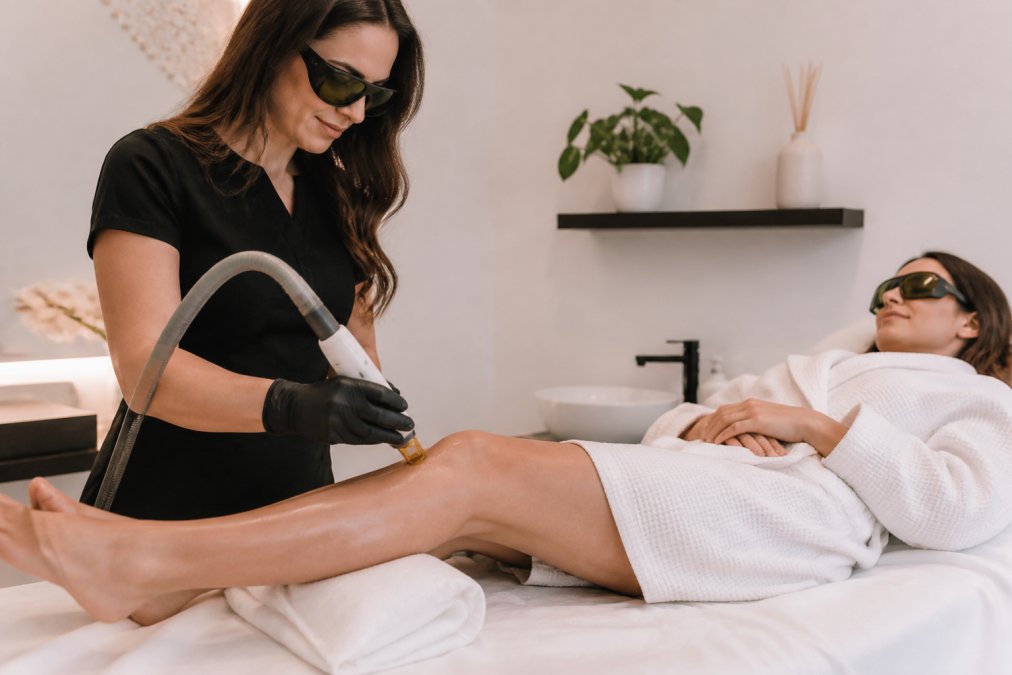
A qualified aesthetic practitioner holding a laser handpiece with a cooling tip close to a client’s lower leg while the client rests comfortably on a treatment bed
Modern devices use cooling technology built into the handpiece, which chills the skin as the laser fires. That cooling is what makes the aesthetic practitioner able to work comfortably across larger body areas without the treatment becoming unbearable.
You may notice redness, called erythema, and slight swelling around the follicles afterwards. This usually settles within hours to a day or two and is a normal sign that the follicle has responded.
How Many Sessions for Laser Hair Removal on Face and Body
Most people need a course of sessions rather than a single appointment, typically spaced several weeks apart to match the growth cycle. The exact number varies with the area, your hair, and your hormones.
Area | Typical session length | Common spacing |
|---|---|---|
Underarm | A few minutes | 6 weeks apart |
Bikini line | Short | 6 weeks apart |
Facial hair | Short | 4 weeks apart |
Legs | Longer | 6 weeks apart |
Back | Longer | 6 weeks apart |
Facial hair and hormonal hair can be more stubborn and may need more sessions or ongoing top-ups. Your practitioner should map out a realistic treatment plan at your consultation rather than promising a fixed number.
Laser Hair Removal Aftercare Tips for Smooth, Calm Skin
Good laser hair removal aftercare tips are simple: keep the area cool, calm, and protected from the sun. What you do in the days after treatment determines how comfortable your skin stays and how well results hold.
Follow these aftercare steps:
- Avoid hot showers, saunas, and intense exercise for 48 hours
- Skip perfumed products, exfoliants, and retinoids on the area
- Apply a gentle, fragrance-free moisturiser
- Use SPF protection daily on any exposed treated skin
- Do not pick or scratch at the follicles
- Avoid sun exposure and tanning beds between sessions
- Let any shedding hair fall out on its own
SPF protection matters more than most people realise. Freshly treated skin is more sensitive to sun exposure, and unprotected sun can cause pigment changes that undermine your results.
Is Laser Hair Removal Permanent? Results and Maintenance Costs
Laser hair removal delivers permanent hair reduction rather than guaranteed permanent removal. Most people see a lasting, major reduction in hair, but some finer or hormonally-driven hair can return over time and need occasional top-up sessions.
That distinction matters for your budget. Rather than one payment and done, think of it as a course of sessions followed by low-frequency maintenance. Because we do not publish fixed pricing, the honest answer on cost is that it depends on the area, the number of sessions, and your individual treatment plan, so ask for a personalised quote at your consultation.
What Drives the Price of a Course
When you compare quotes, the headline per-session figure is rarely the whole story. The total cost of a course depends on:
- Area size, a small area such as the upper lip or underarm needs less machine time than legs, back, or full body.
- Number of sessions, most courses run to six or more sessions, and hormonal areas such as the face or neck often need more.
- Laser type, Different laser types have varying costs to clinics, which can be reflected in pricing.
- Practitioner seniority, a medically supervised or dermatologist-led service typically costs more than a technician-led one.
- Location and clinic overheads, Location can influence pricing.
Total Cost of Ownership, Not Just Per Session
The more useful number is what you will spend across the whole journey: the initial course, plus any top-ups over the following years. A common pattern is a course of six to eight sessions for a mid-sized area, followed by one or two maintenance sessions a year to keep results stable.
Ask for a clear understanding of the initial course cost and any potential maintenance costs. A clinic that provides transparent information helps you plan effectively.
Why Some Hair Comes Back
Hair that returns after a course is usually driven by hormones rather than by the laser failing. Conditions such as polycystic ovary syndrome, thyroid changes, pregnancy, and the menopause can all stimulate new hair growth in areas that were previously clear. If your hair returns in a pattern that suggests a hormonal cause, it is worth speaking to your GP before booking further sessions, because treating the underlying cause is more effective than repeatedly lasering the same area.
Choosing a Clinic: Consultation, Qualifications and Clinical Safety
The right clinic protects your skin, explains your options honestly, and shows you its credentials before you commit. Clinical safety and laser safety standards should be visible, not something you have to dig for.
Ask these questions at your consultation:
- Who performs the treatment, and what qualifications do they hold?
- Is a dermatologist-led or medically supervised service available if needed?
- Can I see before-and-after images for my skin type and concern?
- How do you adjust settings for skin sensitivity and different skin tones?
- What patch test and aftercare process do you follow?
- What happens if I experience a side effect?
At Skin Perfection London, established in 2012, we build tailored treatment plans around your individual skin condition and use clinically-proven machines. Our patients frequently tell us the discomfort is minimal and fades in seconds, and that they have seen genuine improvement in their targeted areas.
If you have darker skin, one of the most common worries is safety. As our client Clara Armando put it, she saw great improvement and would recommend the clinic “for dark skin person.” That confidence comes from matching the right technology and settings to your Fitzpatrick skin type from the very first session.
For guidance on how medicines and medical devices are regulated, the Medicines and Healthcare products Regulatory Agency is the official source.
Frequently Asked Questions
How much does laser hair removal actually cost?
Pricing depends on the area treated, the number of sessions in your treatment plan, and the technology used, so clinics quote after a consultation rather than a flat rate. Small areas such as the upper lip or underarm usually cost less per session than larger areas like the back or full legs. Ask for a written quote that covers the full course, not just the first appointment, so you can compare total cost rather than session price. Skin Perfection London can confirm current pricing at consultation.
Why might hair growth appear to increase after laser treatment?
Hair grows in cycles, and a laser only affects follicles in the anagen (active growth) phase. Follicles that were resting when you had treatment will later push out new hairs, which can make regrowth look heavier for a short period. This is usually synchronised shedding rather than new growth. Shaving between sessions, rather than waxing or plucking, keeps the treatment plan on track and helps you judge real progress over several sessions.
Is it okay to shave two days before laser hair removal?
Shaving the day before or on the morning of your appointment is the usual guidance, because the laser needs the hair shaft present in the follicle without long surface hair to burn. Shaving two days before is generally fine if your hair grows slowly, but leaving stubble that is too long can make the session less comfortable. Follow the specific preparing for laser hair removal instructions your clinic gives, and avoid waxing, epilation or plucking for at least four weeks beforehand.
How do I verify the safety standards of a laser hair removal clinic?
Check that the clinic uses appropriate laser equipment, that practitioners hold relevant qualifications, and that a patch test and full consultation are offered before any course begins. Ask who supervises the treatments, how complications are handled, and whether you can see before-and-after examples for your skin tone. A clinic that answers these questions openly, and refuses to treat you without a consultation, is a safer choice. Choosing a laser clinic is really a decision about trust: in the technology, in the practitioner, and in the plan they build for your skin. Skin Perfection London offers tailored treatment plans and a personalised, supportive journey from your first patch test onwards. Get started with Skin Perfection London and book a consultation to find out what a realistic treatment plan looks like for your skin and goals.